






Plymouth Data Recovery — No.1 Hard Disk & SSD Specialists (25+ years)
With 25+ years’ experience, Plymouth Data Recovery provides professional recovery for all hard drives and SSDs, across every major brand, interface and file system. We use a forensic-first, read-only imaging workflow, then rebuild data structures on the clone—never on your original device. Free diagnostics with clear options before any paid work begins.
Top 20 manufacturers & popular model families we recover
(Representative ranges—if yours isn’t listed, we still support it.)
-
Seagate — BarraCuda/FireCuda/IronWolf/IronWolf Pro/Nytro
-
Western Digital (WD) — Blue/Black/Red/Red Plus/Red Pro/Purple/Gold/SN770/SN850X
-
Toshiba — P300/X300/N300/AL14/AL15 (SAS)/MG (enterprise)
-
Samsung — 870 EVO/870 QVO/970 EVO+/980/990 Pro
-
Hitachi HGST (Ultrastar) — 7K/He series; Ultrastar DC HC5x/HC7x
-
Intel — 660p/670p/750/SSD D3/D7 (enterprise)
-
SanDisk — Ultra 3D/Extreme Pro SATA; WD-branded NVMe successors
-
Kingston — A2000/NV2/KC2500/KC3000/Fury Renegade
-
Crucial (Micron) — MX500/P3/P3 Plus/P5 Plus/T700
-
ADATA — SX8200 Pro/Gammix S70/S70 Blade/Legend
-
Corsair — MP510/MP600 (Core/Pro)/MP700
-
Fujitsu (legacy HDD) — MHY/MHW/MJA series
-
PNY — CS900/CS2140/CS3140
-
Sabrent — Rocket (PCIe 3/4)/Rocket 4 Plus/Rocket 5
-
TeamGroup — MP33/MP34/T-Force CARDEA (A440/A540)
-
LaCie (Seagate) — Rugged/d2/2big/6big (DAS; SATA/SAS/NVMe inside)
-
Transcend — SSD230/ESD370C/ESD380C; StoreJet (HDD)
-
OWC — Aura/Envoy/Mercury Extreme/ThunderBlade
-
Silicon Power — A60/A80 (HDD), US70/XS70/UD90 NVMe
-
Verbatim/Intenso (consumer externals) — Store ’n’ Go, Portable SSD/Memory Case
Interfaces & interconnects we support
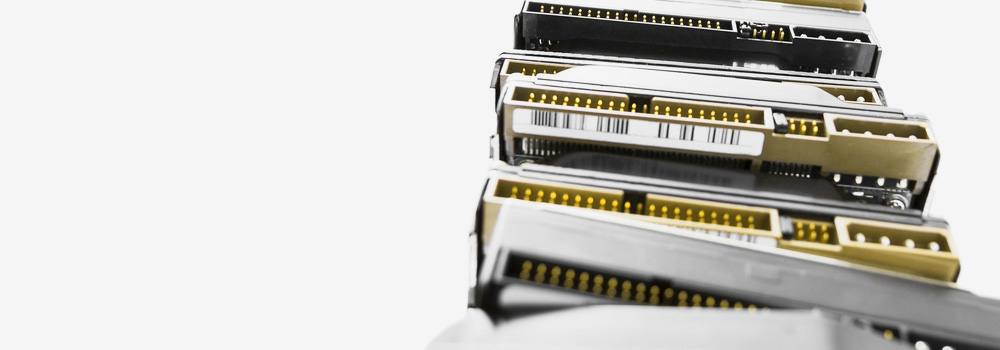
SATA I/II/III, PATA/IDE (40/44-pin), ZIF/LIF PATA 1.8″, mSATA, microSATA, SAS 3/6/12 Gb, Parallel SCSI (Ultra/160/320), Fibre Channel, PCIe/NVMe (M.2 B/B+M/M-key, AIC), U.2 / U.3 (SFF-8639), mini-SAS (SFF-8087/8643/8654), eSATA, USB 2.0/3.x/USB-C/UASP, Thunderbolt 1/2/3/4, FireWire 400/800, Apple PCIe AHCI/NVMe blades (2013–2017), soldered NVMe (Apple silicon), SATA DOM, RAID backplanes.
File systems & volume tech we rebuild
NTFS, ReFS, exFAT, FAT32, HFS+, APFS, ext2/3/4, XFS, Btrfs, ZFS, LVM/mdadm, Windows Dynamic Disks, Storage Spaces, BitLocker, FileVault, LUKS/dm-crypt, Apple Fusion.
What goes wrong — and how we fix it (lab detail)
Golden rule: Stabilise and image read-only to a verified clone. Perform electronics/firmware/mechanical work only to enable safe imaging. All logical/file-system repair is on the clone.
Mechanical HDD
-
Head crash / clicking / no mount → Diagnose head currents, SA access, error heatmap → Matched donor HSA (model/firmware/micro-jog) + ROM adaptives check → Per-head imaging with short retries and cooling cycles.
-
Spindle/motor seizure / beeping → Current ramp + free-spin test → Chassis/motor transplant with servo alignment → Verify SA then zone-priority imaging.
-
Platter wear/surface damage → Head/zone error mapping → Skip-range strategy, outer-to-inner multi-pass; partial file carving for unrecoverable bands.
-
Preamp failure → Bias/current signatures → HSA swap; conservative imaging profile.
Electronics & Power
-
PCB/TVS/regulator failure → Rail checks; replace TVS/LDO/regulators; ROM/adaptives transfer; regain SA → image.
-
Power surge/ESD → Component-level repair (drivers/MCU rails), ripple check → image.
-
Bridge faults (USB/TB) → Bypass to SATA/NVMe host; stabilise link (BOT vs UASP) → image.
Firmware/Service Area (HDD)
-
Translator corruption / 0 MB capacity → Vendor terminal → Rebuild translator / load recovery microcode → image by head/zone.
-
SA module damage / “slow issue” → Patch DIR/modules, disable background scans; head-zoned imaging.
-
Password/ATA lock → Authorised unlock (proof of ownership) → image.
SSD/NVMe
-
Controller failure / safe-mode / 0 B → Attempt vendor loader export; if dead → BGA chip-off per-die dumps (note: many self-encrypt—controller keys required) → FTL reconstruction (ECC BCH/LDPC, XOR/scrambler, die/plane/interleave) → build raw image.
-
PMIC/LDO burn → Replace power ICs; if controller revives → image; else chip-off.
-
NAND wear/retention/read-disturb → Temperature-controlled imaging; voltage stepping/read-retry matrices; majority-vote merge.
-
Thermal throttling/link resets → Clamp PCIe link (Gen3 x2/x1), active cooling; staged imaging.
Logical / Partition / File-system
-
Deletion/formatting/partition loss → Rebuild GPT/boot sectors from backups; journal-aware recovery ($LogFile/USN, APFS checkpoints/omap, exFAT bitmap); deep signature carve for large media (PST/VM/MP4).
-
Metadata corruption → NTFS $MFT/$MFTMirr, HFS+/APFS B-trees/omap, ext4 backup superblocks, XFS log, ReFS object table/integrity streams.
-
Encryption layers (BitLocker/FileVault/LUKS/Opal) → Full-disk image first; valid keys required; decrypt clone; export read-only.
System-level & operational
-
“Drive not recognised”, BIOS/UEFI errors → Link-layer diagnostics; safe PIO-like imaging; FS repair on image.
-
Overheating → Thermal management; priority passes over weak regions.
-
Failed RAID rebuilds / DAS/NAS externals → Image all members; reconstruct virtual array (order/chunk/parity/mirror); then FS repair on assembled LUN.
-
CCTV overwritten data → Truly overwritten blocks are unrecoverable; we target pre-overwrite ranges, indices, and off-box replicas.
Professional recovery process
-
Intake & free diagnostics – Identify interface, media type, encryption, symptoms; document case.
-
Forensic imaging first – Hardware imagers with head-maps, timeout/ECC control (HDD); read-retry/voltage stepping (SSD/NVMe).
-
Targeted repairs (if needed) – ROM transfers, firmware patching, donor components, board-level power fixes, or chip-off + FTL reconstruction.
-
Logical/data recovery – File-system reconstruction (NTFS, HFS+, APFS, ext, XFS, ReFS, exFAT, etc.) and metadata repair on the clone.
-
Verification & delivery – Per-file hash verification (MD5/SHA-256), sample-file testing, and secure hand-off (encrypted media or secure transfer).
Top 100 hard-drive/SSD errors we recover — with technical approach
Format: Issue → Diagnosis → Lab recovery (on the clone/virtual model)
Mechanical HDD (1–20)
-
Head crash/clicking → Head currents/SA tests → Donor HSA + adaptives; per-head imaging.
-
Stiction (heads stuck) → Acoustic + spin profile → Free HGA; cold low-speed imaging.
-
Spindle/motor seizure → Current ramp; free-spin test → Motor/chassis transplant; servo align; image.
-
Media scratches/rings → Error heatmap → Skip-range multipass; carve partials.
-
Off-track after drop → PES tuning → Micro-alignment; burst imaging.
-
Preamp failure → Bias anomalies → HSA swap; conservative imaging.
-
G-list explosion → Vendor slow-fix → Head-zoned imaging.
-
Translator corruption → Vendor terminal → Rebuild translator; image by zone/head.
-
SA module/dir damage → Use alt SA; patch; image.
-
ROM/adaptives loss → SPI dump/port; re-flash; validate; image.
-
Bearing wear → Vibration/thermal profile → Short passes around resonance.
-
Helium leak → Temp-stabilised short passes; isolate weak head.
-
Ramp damage → HSA + ramp swap; recalibrate; image.
-
Contamination/ingress → Decontaminate; new HSA; cold imaging.
-
Platter imbalance → Motor transplant; servo tune; cautious imaging.
-
Head slap → HSA replacement; adaptive gain retune.
-
Warped platters → Thermal sweet-spot imaging; carve.
-
Sticky spindle lube → Motor swap; soft spin-up; image.
-
Latch failure → Mechanical release; HSA replace; image.
-
Prior mishandling (mis-park) → Correct HSA install; recal; image.
Electronics/Power/Bridge (21–35)
-
PCB failure/TVS short → Replace TVS/regulators; ROM transfer; image.
-
Surge/ESD damage → Component-level repair; rails verify; image.
-
USB-SATA bridge dead → Bypass to SATA; image.
-
Thunderbolt bridge fault → Transplant module; or attach raw; image.
-
WD 3.3 V pin-3 inhibit → Isolate pin; correct PSU; image.
-
Damaged SATA connector → Rework; force lower link speed; image.
-
Shorted pre-reg caps → Thermal camera locate; replace; image.
-
Oxidised USB-C port → Clean/rework; bypass; image.
-
Burned driver/MCU → Donor PCB + ROM; SA check; image.
-
Backplane CRC storms → New HBA/cable; QD=1, small blocks; image.
-
Blown ESD arrays (bridge) → Replace; BOT fallback; image.
-
Under-voltage brownouts → Bench supply; soft-start; image.
-
Wrong PSU polarity/voltage → Replace protection; assess; image.
-
Faulty power button logic → Force spin via SATA; image.
-
EMI-susceptible cable → Replace/shield; clamp link; image.
Firmware/Service-Area (36–45)
-
0 MB/0 LBA capacity → Clear flags; translator regen; image.
-
SMART overflow “slow issue” → Disable BG ops; zoned imaging.
-
P-list/G-list corruption → Rebuild lists; synthetic translator; image by physical address.
-
Wrong head map → Patch ROM head map; isolate weak head; image rest.
-
Adaptive tables corrupt → Recompute bias/gain; re-flash; image.
-
ATA security lock → Authorised unlock; image.
-
SA mirror failure → Use surviving SA copy; patch; image.
-
Loader mismatch (donor PCB) → Load compatible microcode; image.
-
Self-test hang → Abort vendor test; conservative timeouts; image.
-
Background media scan interference → Disable; steady imaging.
SSD/NVMe media & controller (46–65)
-
Controller death → Try vendor loader; else chip-off; FTL rebuild; image.
-
PMIC/regulator burnout → Replace; if still dead → chip-off.
-
DRAM/cache failure → Emulate cache; else chip-off + offline mapping.
-
NAND retention loss → Cold imaging; voltage stepping; read-retry matrix.
-
Read-disturb (TLC/QLC) → Lower thresholds; idle cycles; prioritise weak dies.
-
Firmware safe-mode → Load recovery microcode; export namespaces; treat as raw.
-
Namespace/ID corrupt → Rebuild GPT from FS signatures; image logical space.
-
Thermal throttling/link flap → Active cooling; reduce PCIe speed; staged imaging.
-
USB-NVMe bridge bug → Bypass; image on motherboard M.2.
-
M.2 pad damage → Micro-wire to pads; image via adapter.
-
SATA SSD RO mode → Image within limits; avoid writes; FS repair.
-
Hidden OP areas omitted → Include reserved ranges; rebuild address space first.
-
Opal/SED encryption → Image; valid keys required; decrypt clone; export.
-
Interrupted firmware update → Rollback loader; else chip-off + FTL.
-
TRIM after deletion → Physically erased pages: carve journals/caches; set expectations.
-
Metadata journal loss → Heuristic page ordering; ECC-score selection.
-
Mixed NAND generations → Per-die profile; merge with parity/meta.
-
Controller XOR unknown → Pattern/XOR discovery via FS cribbing; apply map.
-
Interleave/channel mis-detect → Force correct timings; redump; rebuild.
-
Bad CE/WE/RE line on monolith → Re-wire to reader; per-channel dumps.
Logical/Partition/File-system (66–85)
-
Accidental deletion → Journal-aware undelete; carve unallocated/slack.
-
Quick/full format → Rebuild GPT/boot; use $MFTMirr/backups; deep carve.
-
GPT/MBR loss → Synthetic GPT from FS headers; mount RO.
-
NTFS $MFT/$LogFile damage → Replay log; rebuild MFT; relink orphans.
-
ReFS object table issues → Integrity streams; export consistent objects.
-
APFS container/omap corruption → Walk checkpoints; rebuild omap; mount Data RO.
-
HFS+ catalog/extent B-tree → Rebuild; allocator-pattern carving.
-
ext4 superblock/inode table → Use backup superblocks; offline fsck-like repair.
-
XFS log corruption → Manual log replay; directory rebuild.
-
Btrfs checksum/subvolume errors → Best-pair superblocks; tree-search roots; export snapshots.
-
Time Machine sparsebundle damage → Repair bands; export snapshots; carve band payloads.
-
VMFS/VHDX/VMDK on externals → Rebuild descriptors/chains; mount and export.
-
BitLocker/FileVault/LUKS → Full image; decrypt with keys; export RO.
-
Mixed sector sizes (512e/4Kn) → Normalise in virtual model; correct offsets.
-
Boot signature collision → Fix unique disk ID; reattach safely on clone.
-
exFAT bitmap/Upcase corruption → Rebuild allocation chains; recover orphans.
-
FAT32 root/dir issues → LFN entry repair; chain reconstruction.
-
APFS snapshot bloat → Target healthy checkpoint; export; don’t prune on original.
-
HFS+ journal overflow → Manual replay on image; neutralise bitmaps.
-
Deleted large contiguous media → Header rebuild + stream stitching (MP4/MOV/MXF/RAW).
System/Operational/RAID/DAS/NAS (86–96)
-
“Drive not recognised” → Link tests; safe PIO-like imaging; FS repair.
-
BIOS refuses USB mass-storage → Direct SATA attach; image.
-
UASP driver bugs → BOT fallback; QD=1; image.
-
Malware/crypto-locker on external → Forensic image; neutralise; export clean set.
-
Overheating/throttling → Active cooling; prioritised passes.
-
Power-loss mid-write → Journal-first recovery; reconcile partials.
-
NAS/DAS RAID member failure → Image all members; virtual array; FS repair.
-
Wrong disk order inserted → Entropy/order solver; reassemble; export.
-
Failed rebuild contamination → Use pre-rebuild clones; ignore later writes; reconstruct.
-
iSCSI LUN on external/NAS damaged → Recover LUN file; rebuild guest FS.
-
Storage Spaces/Dynamic Disk DB loss → Rebuild slab/LDM; export VDs; fix guest FS.
Environmental/Mishandling (97–100)
-
Fresh water ingress → Rinse/neutralise; dry; electronics/mech triage; image.
-
Salt water ingress → Immediate neutralisation; corrosion window; accelerated imaging.
-
Fire/heat → PCB rebuild; possible platter transfer; cautious imaging.
-
Severe shock/static → Replace blown protection/heads; stabilise; image.
Why choose Plymouth Data Recovery
-
25 years in business with thousands of successful recoveries
-
Multi-vendor expertise across consumer, enterprise and SSD/NVMe technologies
-
Advanced tools & donor inventory to maximise recovery success
-
Free diagnostics with clear recovery options before work begins
Ready to begin?
Contact Plymouth Data Recovery for your free diagnostic today. We’ll stabilise the device, image it safely, and rebuild your data with forensic-grade care.